Rosboxar Explained: Innovation & Modern Possibilities 2025
Introduction: A New Framework for a Changing World
Innovation no longer moves in straight lines—it adapts, morphs, and reinvents itself at lightning speed. In today’s digital-first era, people are seeking tools and frameworks that are not only efficient but also flexible enough to evolve with their ideas. Enter Rosboxar, a rising concept that blends technology, creativity, and modular adaptability into one forward-thinking approach.
Whether you are an entrepreneur looking for scalable solutions, a designer seeking freedom to experiment, or simply someone curious about how future innovations will shape daily life, Rosboxar is emerging as a term worth knowing. This article explores what Rosboxar means, why it matters, and how it is poised to influence technology, design, business, and beyond
What Is Rosboxar?
At its core, Rosboxar represents a fusion of digital technology, modular design, and adaptive creativity. It’s not one specific product or platform. Instead, it’s a philosophy and flexible framework that can be applied across industries.
Think of Rosboxar as a toolkit for innovation—a way of building and problem-solving that emphasizes versatility, scalability, and creative exploration.
Key Characteristics of Rosboxar
- Not industry-bound: Applicable to software, design, business, and even lifestyle.
- Flexible by design: Adapts to the needs of users and organizations.
- Future-ready: Emphasizes modularity, meaning parts can be swapped, upgraded, or repurposed.
Rosboxar isn’t about rigidity—it’s about growth without unnecessary barriers.
The Philosophy Behind Rosboxar
Rosboxar is built on a powerful idea: innovation through integration. Modern challenges require tools that don’t just solve problems but evolve alongside them.
Its philosophy revolves around three principles:
- Adaptability → Solutions should grow and shift with changing demands.
- Collaboration → Barriers between disciplines must fall; Rosboxar encourages shared creativity.
- Empowerment → Both individuals and organizations should be able to unlock more with fewer resources.
In essence, Rosboxar sits at the intersection of logic and imagination, helping people think outside the box while still operating within reliable systems.
Applications of Rosboxar
One reason Rosboxar is gaining traction is its broad range of applications. Let’s look at where it’s making an impact:
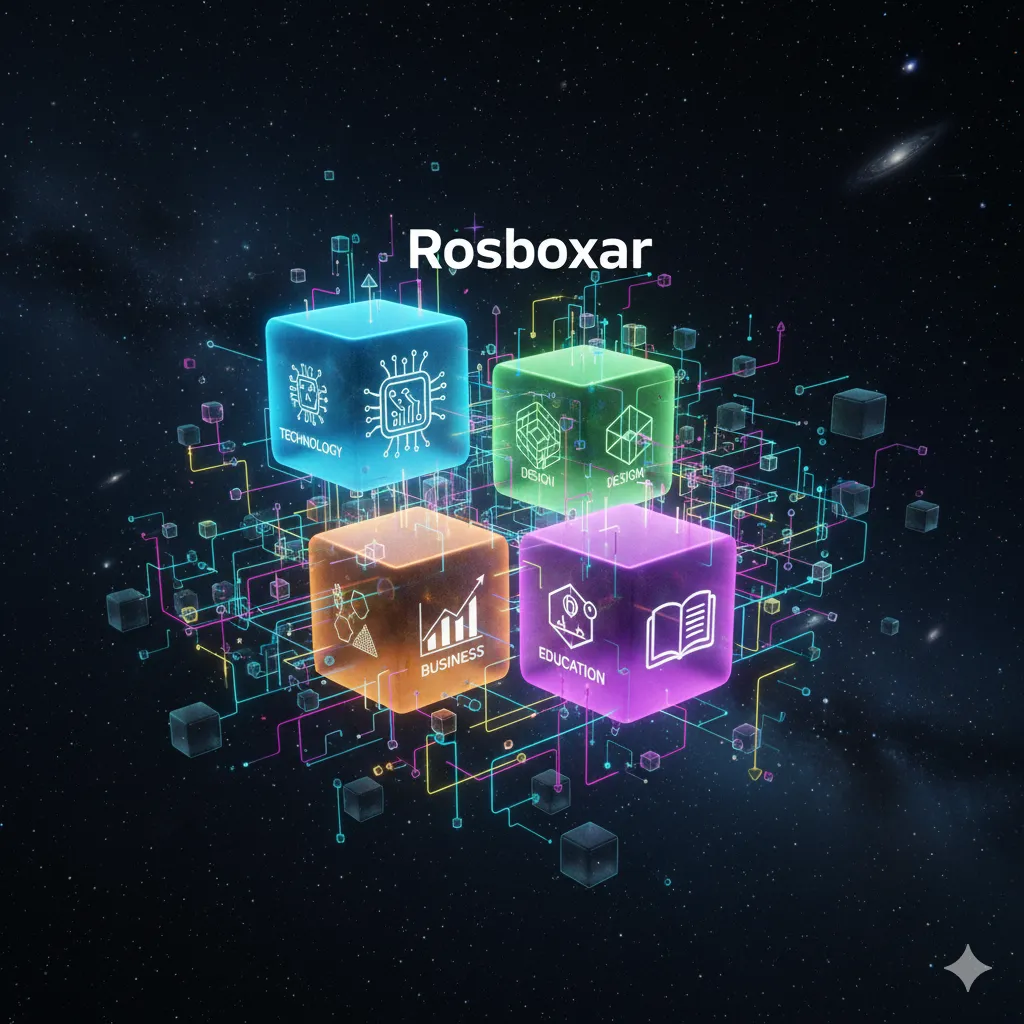
1. Technology and Software
Rosboxar offers a blueprint for modular development in tech.
- Developers can build apps that evolve over time without needing complete rebuilds.
- Businesses can integrate Rosboxar-inspired frameworks into their infrastructure for smooth scaling.
- Startups benefit from its cost-effective adaptability when pivoting in fast-moving markets.
2. Design and Creativity
In creative industries, Rosboxar represents freedom without chaos.
- Architects and designers can test modular concepts in buildings, 3D modeling, or digital art.
- Artists can create flexible installations that evolve with interaction.
- Graphic designers can reuse and reimagine templates with minimal effort.
3. Business Innovation
In business, Rosboxar has become a playbook for agility.
- Encourages quick prototyping and iterative processes.
- Fosters collaboration across teams, merging technical, creative, and operational skill sets.
- Gives small businesses the ability to compete at scale without heavy upfront investment.
4. Education and Learning
Rosboxar is shaping classrooms and digital learning spaces.
- Teachers can build dynamic modules instead of rigid lesson plans.
- Students learn adaptability and creative problem-solving.
- Hybrid learning platforms can implement Rosboxar-inspired structures for flexible, personalized education.
5. Personal Lifestyle
Even at the individual level, Rosboxar can be applied to daily organization and hobbies.
- Use it as a method for structuring projects or personal goals.
- Adopt its modular mindset for creative hobbies like writing, DIY, or coding.
- Enhance productivity with flexible planning frameworks.
Benefits of Rosboxar
Why are people paying attention to Rosboxar? Because its benefits resonate across contexts.
- Flexibility → Works across industries and scales.
- Scalability → Grows with your business, project, or personal needs.
- Efficiency → Simplifies complex processes into manageable steps.
- Creativity → Provides freedom to test and innovate without restrictions.
- Collaboration → Encourages teamwork across disciplines.
- Future-Proofing → Designed to evolve with technology and trends.
This adaptability explains why both professionals and enthusiasts are drawn to Rosboxar as a forward-looking framework.
Comparison: Rosboxar vs. Traditional Frameworks
| Feature | Traditional Frameworks | Rosboxar |
|---|---|---|
| Structure | Rigid, fixed models | Modular, adaptive, customizable |
| Scalability | Costly upgrades required | Designed for seamless growth |
| Collaboration | Often siloed teams | Cross-disciplinary, integrated |
| Creativity | Limited by predefined rules | Encourages experimentation |
| Future-readiness | Slow to adapt to new trends | Built to evolve with innovation |
This table highlights why Rosboxar feels like a natural upgrade from older, less adaptable systems.
The Future of Rosboxar
Looking ahead, Rosboxar has the potential to influence multiple global trends:
- Artificial Intelligence Integration: AI could supercharge Rosboxar by making it more intuitive and predictive.
- Global Collaboration Platforms: Imagine creators worldwide working together on modular Rosboxar-based projects.
- Sustainable Innovation: Its efficiency could help develop eco-friendly, resource-saving systems.
- Next-Gen Learning Tools: Future classrooms may adopt Rosboxar-driven models to prepare students for an adaptive workforce.
Rosboxar isn’t just a passing buzzword—it’s shaping up to be a mainstream innovation philosophy.
Challenges and Considerations
Of course, Rosboxar isn’t free of hurdles:
- Awareness Gap: Many people still don’t understand the concept.
- Implementation Costs: Setting up modular frameworks may require upfront investment.
- Over-Flexibility Risks: Too much adaptability can lead to confusion if not balanced with structure.
To succeed long-term, Rosboxar advocates will need to balance flexibility with discipline and ensure accessibility for individuals and businesses alike.
Why Rosboxar Matters Today
We live in a time where the line between creativity and technology is blurring. People demand tools that don’t just work but inspire.
Rosboxar matters because it:
- Encourages collaboration instead of silos.
- Prepares industries for rapid change.
- Empowers individuals to innovate on their own terms.
It’s not just a framework—it’s a mindset shift toward adaptable, human-centered innovation.
Conclusion: The Journey of Rosboxar
Rosboxar is more than just a trendy concept—it’s a vision for the future of problem-solving. By combining modular design, adaptive creativity, and scalable efficiency, it has the potential to reshape industries, redefine education, and inspire individuals.
Whether you’re a tech developer, business leader, artist, or student, Rosboxar offers a flexible roadmap for growth. Its unique blend of logic and imagination makes it a powerful ally in navigating the complexities of modern life.
As digital transformation accelerates, Rosboxar reminds us of one truth: the best innovations are those that adapt, inspire, and empower. The journey of Rosboxar is just beginning—and its future looks bright.
FAQs About Rosboxar
What does Rosboxar mean?
Rosboxar is a concept that blends modular design, technology, and creativity to create adaptable frameworks for innovation.
Is Rosboxar a product or a philosophy?
It’s more of a philosophy and framework, not tied to a single product or platform.
Which industries use Rosboxar?
Technology, design, business, education, and even personal productivity can benefit from Rosboxar.
What makes Rosboxar different from traditional frameworks?
Unlike rigid systems, Rosboxar emphasizes modularity, flexibility, and adaptability.
What challenges does Rosboxar face?
Awareness, implementation costs, and the risk of too much flexibility are current challenges.